
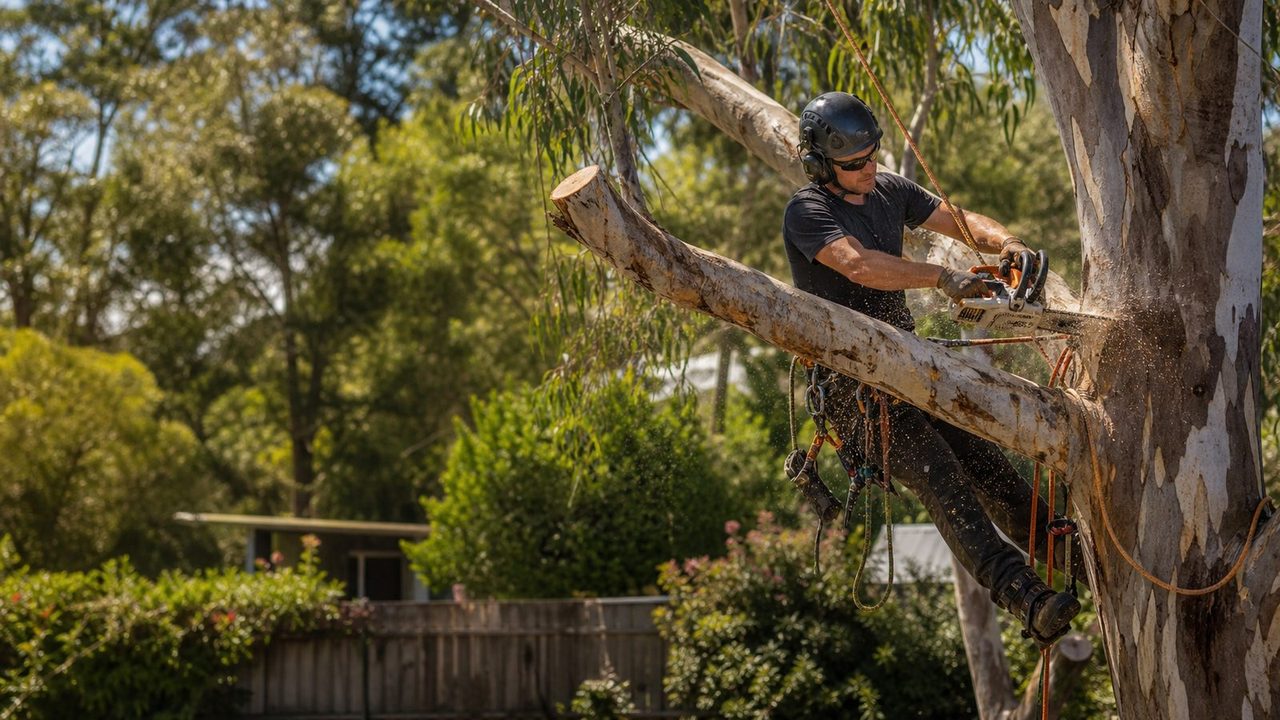
Name the roof problem you want solved
Branches over a roof can create several different concerns: physical contact, leaves in gutters, reduced light or shade across solar panels. Start by naming the actual problem rather than requesting a general reduction of the tree. If branches touch the roof, identify where you have observed contact from a safe position. If the concern is solar output, gather information from the system and ask the solar professional whether shade is a relevant contributor. The same pruning proposal will not necessarily answer every concern.
A useful enquiry describes both the unwanted effect and the part of the tree you want to retain. You may value afternoon shade over the deck while wanting to address a branch near the gutter. Another owner may need roof access for a repair but prefer no wider change to the canopy. These details let the arborist assess a specific objective. They also prevent a quote for making everything smaller from becoming the default response to a narrowly defined problem that could have a less extensive solution.
Observe shade without going onto the roof
Record where shade falls using safe ground-level views and any information already available from your solar monitoring system. Note the date and time of your observations, and distinguish shading of panels from shading of the house or garden. A single photograph does not describe every part of the day. Do not climb the roof to make the evidence more complete. If the panel position cannot be seen safely, use installation drawings or ask the solar professional what information they can provide for the arborist.
Treat that evidence as a discussion aid rather than a production forecast. Ask the solar provider whether the observed shading pattern explains the concern and whether other system issues need checking. Then give the tree contractor a defined objective, such as investigating whether a particular branch group can be pruned appropriately. Avoid asking for a guaranteed energy improvement from a tree quote alone. A clear distinction between the solar diagnosis and the tree-work proposal helps you decide whether pruning is the right next expenditure at all.
Identify branches with the person who will quote
From a safe viewpoint, point out the branch or part of the canopy associated with the concern. Annotated photographs can help, but an arrow drawn across a photograph is not a pruning specification. Ask the arborist to explain which branch structure they are assessing and what kind of work could meet the objective. If several trees overlap, label them separately so that the discussion does not drift from one canopy to another. Keep the agreed identifiers consistent with any approval documents and the final quotation.
For a Terrigal property with a roof beneath a mature canopy, the issue may be above a room you cannot see from the street. A Gosford house on a slope may offer a misleading view of the roof from the driveway. Explain where the concern is experienced inside the house as well as where it appears outside. The contractor can then decide how to inspect it. Do not remove smaller branches yourself to improve the view before the tree has been assessed; you could change the work being quoted.
Ask for pruning that matches tree structure
The International Society of Arboriculture's pruning guidance explains that pruning choices should have a purpose and that reducing height or spread involves suitable remaining branches. This is why a straight line drawn above the gutter is not enough to define the cuts. Ask the arborist what can reasonably be achieved while considering the particular tree. If the requested clearance cannot be achieved appropriately, ask for that limitation and any alternative approach to be explained before you book.
Avoid comparing quotations only by the amount of canopy promised to disappear. A proposal for more cutting is not automatically more useful. Ask how the proposed work relates to the roof problem and what part of the tree will remain. If the quote uses unfamiliar terms, request a plain description linked to the marked photograph or site discussion. Our pruning service page introduces common work categories, but your accepted scope should describe the actual operation rather than relying on a broad service name such as lopping.
Separate roof access from general canopy reduction
Sometimes the immediate need is to let another trade inspect or repair the roof. Tell the arborist what that trade needs to access and arrange for the requirements to be shared directly where possible. A roofer's access concern is not necessarily a request to expose the entire roof permanently. Ask whether the tree work can be scoped around the repair objective and whether the sequence of trades affects how the work should be organised. Keep any access requirement tied to the actual work planned.
If solar installation is proposed rather than already completed, bring the installer into the discussion before committing to pruning. Panel layout and tree retention may need to be considered together. The arborist can address the tree proposal, while the solar designer considers system options. Do not assume that future repeated pruning is included in the economics of the installation unless someone has actually scoped it. A design decision made before installation can be easier to manage than a continuing disagreement about shade after equipment is already fixed to the roof.
Keep building protection in the scope
Tell the contractor about solar panels, skylights, aerials, fragile roofing, glass pool fencing and concealed equipment near the work area. Ask how the site will be set up and how removed material will be handled. You do not need a technical rigging plan to compare quotes, but you should understand which building features were considered and what homeowner preparation is required. If a roof is already damaged, disclose that and provide any relevant advice from the roofer before the tree contractor plans access around it.
SafeWork NSW's tree-work resources identify tree operations as work requiring hazard management. Let the contractor assess the method, particularly around overhead electrical infrastructure and work at height. Do not use a ladder, roof or pole tool to tackle the awkward branch before the booked visit. If an electrical line is involved, keep clear and contact the relevant network operator through its official channel. Describe that issue when enquiring so it is not first discovered by the crew on arrival.
Compare the first result with the ongoing commitment
Ask what ongoing inspection or further work the arborist expects to be relevant after the proposed prune. Do not request an exact universal interval for every tree. Instead ask what changes should prompt another assessment and what the owner should record. If maintaining a desired opening would require a continuing commitment that you cannot manage, discuss that before choosing the first operation. The point is to understand the likely management approach, not to promise that one visit permanently freezes a living canopy in place.
Compare the alternatives honestly. Some owners may accept seasonal shading or arrange roof and gutter maintenance separately. Others may need to investigate a different tree-management option. A decision about removal requires its own assessment and permission process; it should not be presented as the automatic response when pruning has limits. Keep the value of retained shade, screening and garden character in the discussion alongside the roof concern. You can then judge the proposed work against the whole property rather than only the photograph of the obstructed panel.
Check the handover against the original objective
Before work begins, retain photographs showing the agreed branch groups and the parts of the roof discussed. At handover, compare the completed work with the written scope from a safe location. Ask the contractor to explain any part that was deliberately retained or left unresolved. Confirm whether branch debris has been removed and whether any separate roof or gutter cleaning remains to be arranged. Tree pruning should not be assumed to include a roof inspection, electrical check or solar-panel cleaning unless those services were expressly agreed.
If solar performance was the concern, let the solar professional interpret subsequent system observations rather than treating an immediate change as proof of a fixed gain. If building contact was the concern, record whether that particular issue has been addressed and any remaining advice. Keep the pruning record with roof and solar documents for future contractors. A useful completion record says which tree and branch groups were worked on, what outcome was sought and what should prompt review. It gives you a better starting point for the next decision than another request to trim the tree back.
Prepare your clearance-pruning brief
Select what you already know, then add the unresolved question. This creates a note to keep or share with your enquiry, not an assessment or permission to carry out work. Nothing entered here is sent to us.
Questions answered
Will pruning guarantee more solar generation?
No fixed gain is promised here. Ask your solar professional to assess the shading concern, then have the arborist assess what pruning is appropriate.
Is gutter cleaning included?
Only if expressly included in the accepted scope. Clarify debris removal, gutter cleaning and any separate roof attendance before booking.
Can I specify a straight cut line above the roof?
Use the desired clearance to explain the problem, then ask the arborist to specify suitable work for the tree. A line on a photograph is not a complete pruning instruction.
Have a specific roof-clearance problem?
Describe the contact, shading or access issue and the canopy you want retained. Ask for a written pruning scope with the building features and expected result clearly identified.
Discuss your tree work Tap to call