
Decide the handover before accepting the tree quote
The tree is down, but a pile of chips and several heavy logs can leave the homeowner with another job. Decide what happens to the material while the contractor is preparing the quote. Ask for separate descriptions of branch chipping, log handling, removal from the property and the final surface. A phrase such as clean-up included should be explained in terms you can check. Otherwise one person may expect a clear garden while the other plans to leave reusable material neatly stacked beside the driveway.
Start with what you can genuinely use and manage. Keeping some material may suit a garden with accessible beds and a person ready to spread it. Keeping everything may be impractical on a small Woy Woy yard or a sloping Gosford block where material must later be carried uphill. Describe your storage space and handling limits before selecting an option. The tree contractor can then price an agreed result rather than leaving you to discover, after the truck has departed, that the retained pile blocks the only useful access route.
Separate chips, logs and stump grindings
Ask the contractor to describe the material streams the job will produce. Chipped branches, larger timber and stump grindings are not interchangeable handover items. A quote may include chipping branches while leaving trunk sections, with stump grinding booked separately. Write those choices as separate lines. This makes it easier to compare two quotations that both say tree removal but deliver different outcomes. It also helps when a second crew performs the stump work and needs to know what material is already stored near its access route.
Explain the intended destination of anything you want kept. Garden-bed mulch, decorative timber and potential firewood each raise different suitability and handling questions. Do not assume that every part of a removed tree is useful for your chosen purpose. Ask the contractor whether there are reasons to separate or remove particular material, including suspected disease, contamination or problematic plant material. Where specialist advice is needed, resolve that before spreading or moving it around the property. Keeping a pile temporarily is a different decision from declaring it suitable for use everywhere.
Match retained chips to an actual garden task
Identify the beds where you intend to use chips and whether they are ready to receive them. Ask whether the job includes spreading or only leaving a pile. If another gardener will do the spreading, agree the handover with that person before delivery. A vague intention to mulch someday can leave material stored in a place needed for vehicles, access or later work. Decide who will move it, what route they will use and whether their equipment can reach the planned beds.
The International Society of Arboriculture's plant health guidance explains that mulch can help a landscape but can also have adverse effects if misapplied. Ask for advice suited to the retained trees and beds instead of applying a universal depth from memory. Keep the trunk bases and the intended planting areas in that discussion. If your goal is improving a garden that already has mature trees, arrange the mulch decision around their needs rather than simply using up the entire pile produced by the removal.
Choose a tipping position that stays useful
Walk through the proposed tipping position with the contractor. Consider the truck's access, the route you will use to move material and the space required by later trades. A pile beside the gate may be convenient to deliver but difficult to work around. Mark access covers, drains, taps and equipment that need to remain reachable. If the available area is smaller than expected, agree whether less material will be kept or a different arrangement is needed. Do not assume the driver can find an alternative position after arrival.
Discuss the surface beneath the pile and how it will be protected or cleaned. A garden bed, lawn, decorative driveway and shared paved area each create different handover expectations. Take a photograph showing the agreed location and boundaries. If the job spans more than one attendance, clarify whether the pile must move before the next stage. The decision should preserve useful access throughout the job, especially where the house has a single side passage or the garage cannot be reached by another route.
Be realistic about keeping logs
A request to leave firewood should be more specific than leave the big pieces. Ask what form the retained timber will be in, where it will be placed and what work remains for you or another contractor. Cutting into sections, splitting, moving and stacking are different tasks. Confirm which of them are included. Do not assume that a log described as manageable is manageable for the person who will actually handle it. Explain any mobility, access or equipment limits when the contractor prepares the proposal.
Ask a suitable firewood supplier or appliance professional about whether the material is appropriate for your intended use and what preparation is required. A freshly cut log should not be treated as ready fuel simply because it came from a tree in your garden. If you plan to give timber away, arrange the collection and access beforehand. Avoid a public offer that leaves unknown people entering the property while tree work is underway. A modest amount with an agreed destination can be more useful than retaining every log without a handling plan.
Keep disposal requirements separate from assumptions about bins
If material is leaving the property, ask whether the quotation includes loading, transport and the disposal or recycling arrangements. Central Coast Council's household waste information links to the current local services and facilities. Check the applicable acceptance rules before planning to use a household collection for material from your job. Do not assume that a full tree's waste can be placed in a green bin or left at the kerb under an ordinary booking without checking the conditions.
Where the homeowner intends to arrange disposal independently, spell that out in the tree-work quote and agree how the material will be left for collection. Confirm whether the collector accepts the proposed sizes and material types and can reach the pile. Ask what happens if collection is delayed or refused. The cheapest-looking quote can become inconvenient if it depends on a disposal method that has not been arranged. Compare complete outcomes, including any transport and handling you must buy separately, before deciding that leaving waste is the better option.
Plan chipper activity around household access
Ask the contractor where the chipper and collection vehicle will operate and which areas must be kept clear. Explain any shared driveway, pedestrian route, pet access or regular delivery that needs coordination. The crew should decide how its work area is controlled. Household members should not help feed branches into equipment or step into the processing area to collect material. Choose the amount and destination of retained chips before work starts so there is no reason to approach operating machinery to redirect the job.
SafeWork NSW's woodchipper guidance addresses operator competence and safe setup. For a homeowner, the practical step is to respect the exclusion arrangements and use the nominated contact person when a question arises. If you need to leave the property while the vehicle blocks the usual route, discuss that before the operation begins. Do not assume the equipment can stop or move immediately whenever someone needs access. A short household coordination conversation can prevent an avoidable interruption during a demanding part of the job.
Specify stump grindings and the final ground surface
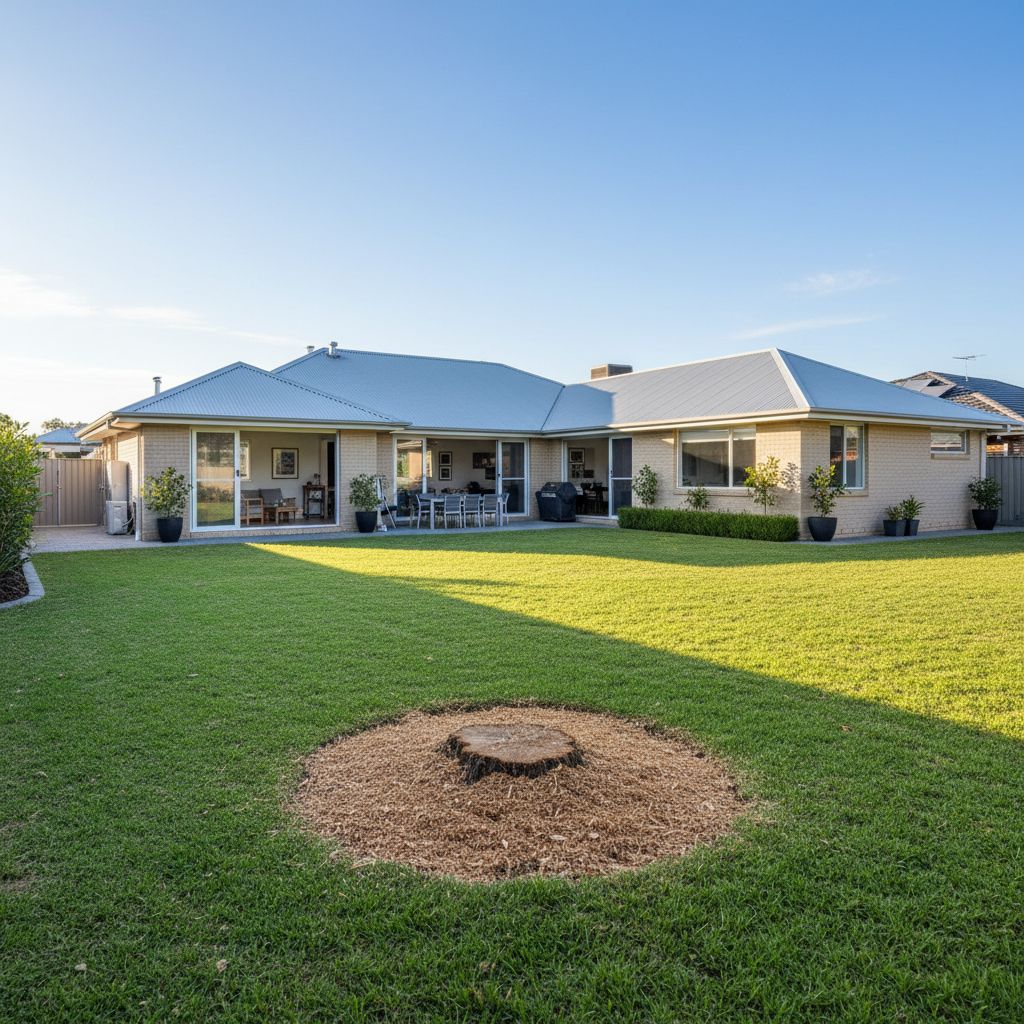
Stump work can leave material and a disturbed area that need their own handover. Ask whether grindings will be removed, left in place or placed elsewhere, and whether any backfilling or later landscape preparation is included. Describe what you intend to do with the space next. A garden bed and a proposed paved surface involve different follow-up decisions. Do not assume that the stump contractor's standard finish is suitable for a builder or landscaper who has not yet specified their requirements for the next stage.
If a later contractor will prepare the surface, ask them what they need before accepting the stump scope. Keep that requirement separate from the decision to retain branch chips for garden use. The existing stump-grinding service page explains the broad service, while the property assessment must settle the actual work. Mark any unresolved roots, access issues or services constraints in the handover. A clear record of what remains below or around the working area is more useful than a surface that merely looks level in a completion photograph.
Agree how to inspect the completed clean-up
Walk the site with the contractor against the accepted scope. Check the paths needed for household access, the agreed stockpile position, retained log locations and any areas excluded from the clean-up. Ask about material caught in garden beds or around structures rather than assuming every small piece was meant to be removed. Define the standard before work where possible: clearing usable paths, collecting branch material and raking an accessible work area are concrete tasks. A natural garden will not necessarily look like an untouched lawn immediately after substantial tree work.
Record anything that remains for another trade and who will arrange it. If a later stump visit is booked, preserve the access it needs and keep the relevant quote with your tree-removal paperwork. If you kept chips or logs, begin with the handling arrangement you made before the work rather than leaving an indefinite pile. The successful outcome is not simply that the tree has gone. It is that the homeowner knows what was removed, what was deliberately retained, how the garden can be used now and what still needs to happen next.
Make your material handover brief
Select what you already know, then add the unresolved question. This creates a note to keep or share with your enquiry, not an assessment or permission to carry out work. Nothing entered here is sent to us.
Questions answered
Is chipping the same as removing the waste?
No. Confirm whether chips leave in the truck, remain in a pile or are spread in agreed locations. Each is a different handover.
Can I change my mind about keeping logs during the job?
Ask the nominated contractor contact before the handling plan changes. Removal may need different transport or additional work, so agree any variation before proceeding.
Are stump grindings the same as garden mulch?
Treat them as a separate material stream. Ask what the operation produces and what is appropriate for your intended use rather than assuming all wood material has the same garden application.
Get a quote for the garden finish you actually want
Include your chip, log and stump-material preferences with the tree enquiry. Ask for removal, storage and any spreading work to be stated separately.
Discuss your tree work Tap to call